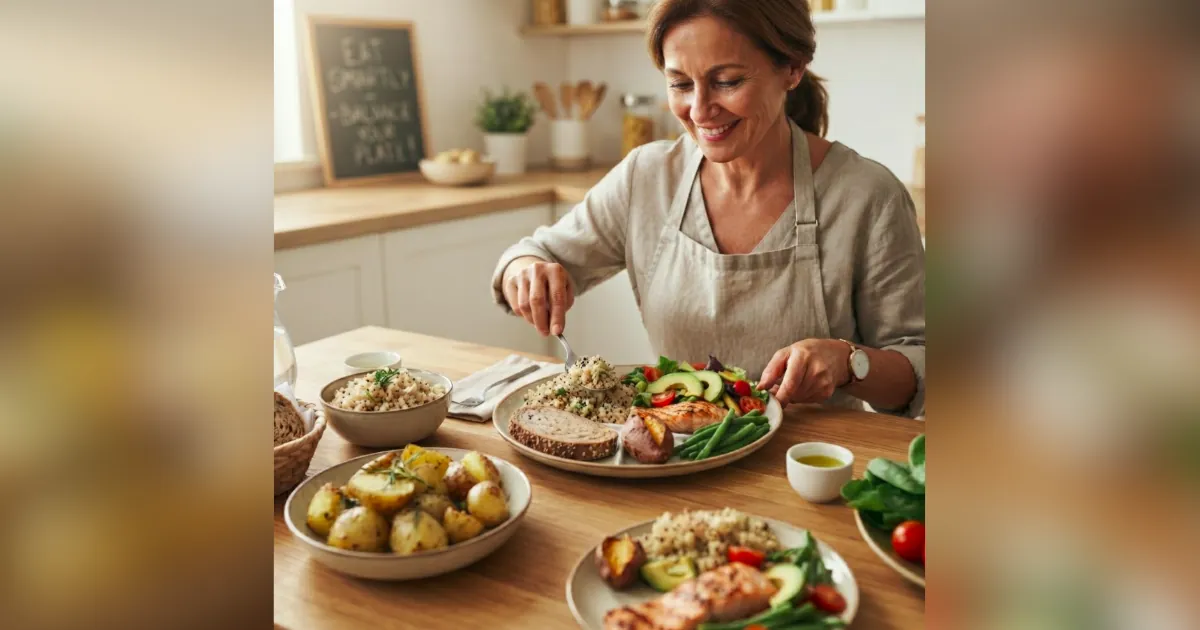
Bread, rice, and potatoes are the foods people with diabetes are often told to avoid. But Dr. Leonid Kim points out the obvious problem: these are staples in most people’s cuisines, so cutting them out forever isn’t realistic.
His message is that you don’t have to. In his video, he shares practical strategies he says can flatten the blood sugar spikes after meals, and in the process help with insulin resistance.
He adds a clear note up front: even though he’s a physician, he’s not your physician, so talk to your own doctor before making any changes to your diet or medication. Here’s his full list, from a clever cooking trick to the timing of your last meal.
Table of Contents
Summarized from a video by Leonid Kim, MD, on the Leonid Kim MD YouTube channel. This article is a summary of the video “Eat Bread, Rice, Potatoes WITHOUT Blood Sugar Spikes.” All ideas belong to the video’s creator, and Dr. Kim did not write or review this article. Watch the original video below.
Key Takeaways
- Dr. Kim says cooling and reheating starchy foods increases resistant starch, which may reduce blood sugar spikes.
- He recommends not eating carbs alone: pair them with protein, fat, or something acidic.
- He says the order you eat matters: vegetables and protein first, carbs last.
- A short walk after meals and an earlier dinner may help too.
- In his view, the type of carb matters more than carbs themselves.
Tip 1: Resistant Starch
Most starches, like bread and pasta, break down into glucose quickly. Dr. Kim explains that repeated blood sugar spikes can worsen insulin resistance and strain the pancreas. Resistant starch behaves differently: your enzymes can’t digest it well, so it travels to the large intestine, where gut bacteria ferment it into short-chain fatty acids like butyrate. In his explanation, these improve insulin sensitivity, calm inflammation, and feed the lining of the colon.
The trick: cook your starchy food, cool it, then reheat it. Cooling causes part of the starch to form crystals that resist digestion, a process called starch retrogradation. He cites studies showing that cooling cooked rice or potatoes to about 39°F (4°C) for 24 hours raises resistant starch, and that eating them cooled-then-reheated led to lower blood sugar and insulin after meals. You can also cool or freeze bread and then reheat it. He says it may taste slightly different, but it’s close.
Naturally high in resistant starch: beans, lentils, peas, oats, and barley.
Tip 2: Don’t Eat “Naked Carbs”
Dr. Kim says what you eat with carbs changes your blood sugar response a lot:
- Protein: he cites a meta-analysis of 154 trials where adding protein reduced the blood sugar response by up to 50% in healthy adults.
- Fat: can blunt early spikes by slowing stomach emptying and helping with insulin clearance.
- Acid: vinegar, lemon, lime, and fermented foods slow starch breakdown, and he says vinegar may also help muscle insulin sensitivity.
So rice with beans is better than rice alone, and potatoes with butter or olive oil produce a gentler rise than potatoes alone.
Tip 3: Eat Carbs Last
Same food, different order, different result. If you start with bread or juice, you get a sharp peak. If you eat protein and vegetables first and finish with carbs, the stomach releases glucose more slowly.
He cites a crossover trial in people with type 2 diabetes where eating protein and vegetables before carbs led to 40% lower glucose and 31% lower insulin responses. A Japanese study using continuous glucose monitors in healthy adults also found that eating rice last reduced after-meal spikes. At restaurants, that means eating the salad and protein before the bread or nachos.
Tip 4: Take a Walk After You Eat
Dr. Kim says a randomized trial found that a 10-minute walk right after a meal lowered after-meal blood sugar. Any light activity can help, such as cleaning the kitchen or climbing stairs, but walking has been studied most.
His explanation: walking activates the soleus, the calf muscle just below the knee. He calls it a metabolic powerhouse because it soaks up glucose quickly and, being made of slow-twitch fibers, can work for a long time before tiring.
Tip 5: Choose the Right Type of Carbs
It’s not about cutting every carb, he says. It’s the type. He uses an analogy: fine flour is like sawdust on a fire, and intact grains are like logs.
- Burns fast (spiky): white bread, cereal, pastries, chips, instant oats
- Burns slow (steadier): steel-cut oats, intact whole grains, high-fiber carbs
His advice is to choose minimally processed, high-fiber, whole-food carbs. He calls fiber one of the most important nutrients to keep even on a low-carb diet.
Tip 6: Don’t Eat Late at Night
Dr. Kim says glucose handling follows a circadian rhythm, so we process sugar worse in the evening. Late at night, melatonin also rises, which he says reduces insulin release, leaving more glucose in the blood. He suggests finishing your last meal at least 3 hours before bedtime.
Practical Tips
- If you have diabetes or take insulin or blood sugar medication, talk to your doctor before changing your diet or activity. Walking after meals or eating differently can lower blood sugar, and your doses may need adjusting.
- Food safety with cooled rice: refrigerate cooked rice soon after cooking, and don’t leave it out at room temperature for long. Reheat it until it’s steaming hot, and don’t reheat it more than once.
- Vinegar should be diluted in water or used in food, not taken straight, since it can irritate your teeth and throat.
- Add beans or lentils to rice dishes for extra fiber and protein.
- If you often feel shaky, dizzy, or very sweaty after a walk or a lighter meal, check your blood sugar and talk to your doctor.
- See a doctor if you have symptoms such as constant thirst, frequent urination, or unexplained weight loss.
Related reading: Dr. Leonid Kim Explains How to Go After Visceral Fat.
Source & Credit
- Expert: Leonid Kim, MD
- Channel: Leonid Kim MD
- Video: “Eat Bread, Rice, Potatoes WITHOUT Blood Sugar Spikes” (about 9:37)
- Link: https://www.youtube.com/watch?v=Ed2kky2yClA
- Publish date: Oct 28, 2025
About This Summary
This article summarizes the views of Leonid Kim, MD, as presented in his YouTube video. The opinions and claims expressed belong to the video’s creator and do not necessarily reflect those of LuvNutrition.online.
Medical disclaimer: This content is for general information only and is not a substitute for professional medical advice, diagnosis, or treatment. Never stop or change prescribed medication without talking to your healthcare provider. Always consult a qualified healthcare provider before changing your diet or taking supplements.