You may have seen the image: a cross-shaped protein that went viral online. Dr. David Jockers says the picture is real, and that the story behind it is more interesting than the debate about whether it’s “fake.”
The protein is called laminin. In his explanation, it’s a structural protein that helps hold your skin, gut lining, and blood vessels together, and your body makes less of it as you age. His video lays out why he thinks that matters and what he suggests doing about it.
Here’s his summary, with the parts of his argument that are his own opinion marked as such, plus the safety points worth keeping in mind.
Table of Contents
Summarized from a video by Dr. David Jockers on the Dr David Jockers YouTube channel. This article is a summary of the video “Why is NO ONE Talking About This Biblical Discovery…” All ideas belong to the video’s creator, and Dr. Jockers did not write or review this article. Watch the original video below.
Key Takeaways
- Dr. Jockers says laminin is a real protein that helps anchor cells to the layer beneath them.
- He says it declines with age, especially after 50, and that chronic inflammation speeds up the loss.
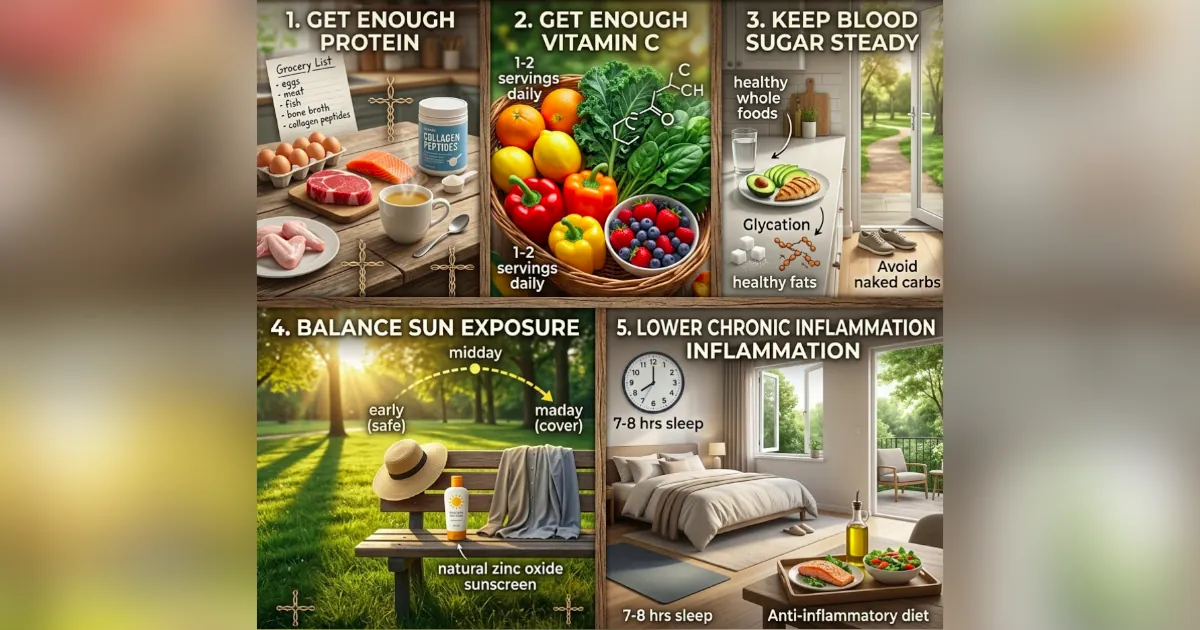
- He suggests five habits: enough protein, enough vitamin C, steady blood sugar, balanced sun exposure, and lower inflammation.
- His claims about “rebuilding” laminin are his own view, not established medical advice.
What Laminin Is
Dr. Jockers explains that laminin sits in the basement membrane, a thin layer under your skin, the lining of your gut, and around your blood vessels. Its job is to grab onto cells and hold them to that layer. Under a microscope, he says, it has one long arm and three shorter arms, which is why it’s often drawn in a cross-like or T shape in textbooks.
He points to a rare condition as an example: babies who can’t make working laminin have skin that blisters or tears with a light touch.
Why He Says It Matters With Age
In his view, laminin helps:
- Skin: anchoring skin cells so skin looks firm
- Blood vessels: keeping the vessel walls strong
- Healing: helping cells rebuild damaged tissue
- Gut lining: keeping it sealed
He says laminin production slows as we age, particularly after 50, and that chronic inflammation switches on enzymes that break laminin down faster than the body can rebuild it. According to him, when laminin breaks down in the gut lining, it stops sealing properly, which can lead to bloating and sluggishness.
Five Habits He Suggests
1. Get enough protein.
Dr. Jockers says laminin needs raw materials, specifically the amino acids proline, hydroxyproline, and glycine. He suggests protein at every meal, such as eggs, meat, or fish, along with bone broth and collagen peptides, which are rich in those amino acids. He also mentions collagen-rich parts of animals, like the joints of a chicken wing.
2. Get enough vitamin C.
He explains that vitamin C is needed for the chemical process that builds and stabilizes structural proteins. His sources: citrus fruits, bell peppers, dark leafy greens, and berries, with one to two servings a day making a difference.
3. Keep blood sugar steady.
High blood sugar causes glycation, where sugar sticks to proteins and stiffens them. He suggests cutting back on sugary drinks and processed carbs, never eating “naked carbs” without protein or healthy fat, and taking a short walk after meals.
4. Balance sun exposure.
Dr. Jockers is a fan of sunlight, but says too much UV can damage structural proteins. His rule of thumb: get sun early in the day before it’s intense, avoid sunburn, and use zinc oxide sunscreen or cover up after a lot of midday sun.
5. Lower chronic inflammation.
His basics: 7 to 8 hours of sleep, lower stress, and an anti-inflammatory diet with less fried and processed food and more fatty fish, olive oil, and leafy greens. He also suggests spending 15 to 30 minutes outside each day.
Staying Hydrated
He adds that hydration isn’t only about water, but water with the right minerals, and that you can eat and manage stress well but still fall short if you don’t drink enough.
A Note on the Science
Laminin is a genuine, well-studied protein. What’s less settled is how much food or supplements can “rebuild” it in the body. Dr. Jockers’ suggestions, such as eating protein and collagen to support laminin, are his own interpretation, and the individual habits above are broadly sensible for health without needing laminin as the reason.
Practical Tips
- Eating enough protein, vitamin C-rich foods, and vegetables, and sleeping well, are widely recommended habits for healthy aging.
- Protein needs differ. If you have kidney disease, ask your doctor before raising your protein intake.
- Check the ingredients if you use collagen peptides or bone broth protein, and avoid them if you have a related food allergy (for example fish or eggs).
- If you have diabetes or take blood sugar medication, talk to your doctor before changing your diet.
- Use sunscreen and avoid sunburn, and get any suspicious skin changes checked by a doctor.
- Don’t treat skin sagging, easy bruising, joint pain, or digestive problems as simply “low laminin.” See a doctor if they’re new or getting worse.
Related reading:
- Surprising Health Benefits of Collagen Beyond Skin and Beauty.
- Dr. David Jockers: Is Sourdough Really Better Than Regular Bread?
- The Truth About Lead and Cadmium in Dark Chocolate.
Source & Credit
- Expert: Dr. David Jockers
- Channel: Dr David Jockers
- Video: “Why is NO ONE Talking About This Biblical Discovery…” (13:32)
- Link: https://www.youtube.com/watch?v=OKFx85sCN9U
- Publish date: Oct 7, 2026
About This Summary
This article summarizes the views of Dr. David Jockers, as presented in his YouTube video. The opinions and claims expressed belong to the video’s creator and do not necessarily reflect those of LuvNutrition.online. This summary covers the health and nutrition portions of the video.
Medical disclaimer: This content is for general information only and is not a substitute for professional medical advice, diagnosis, or treatment. Always consult a qualified healthcare provider before changing your diet or taking supplements.