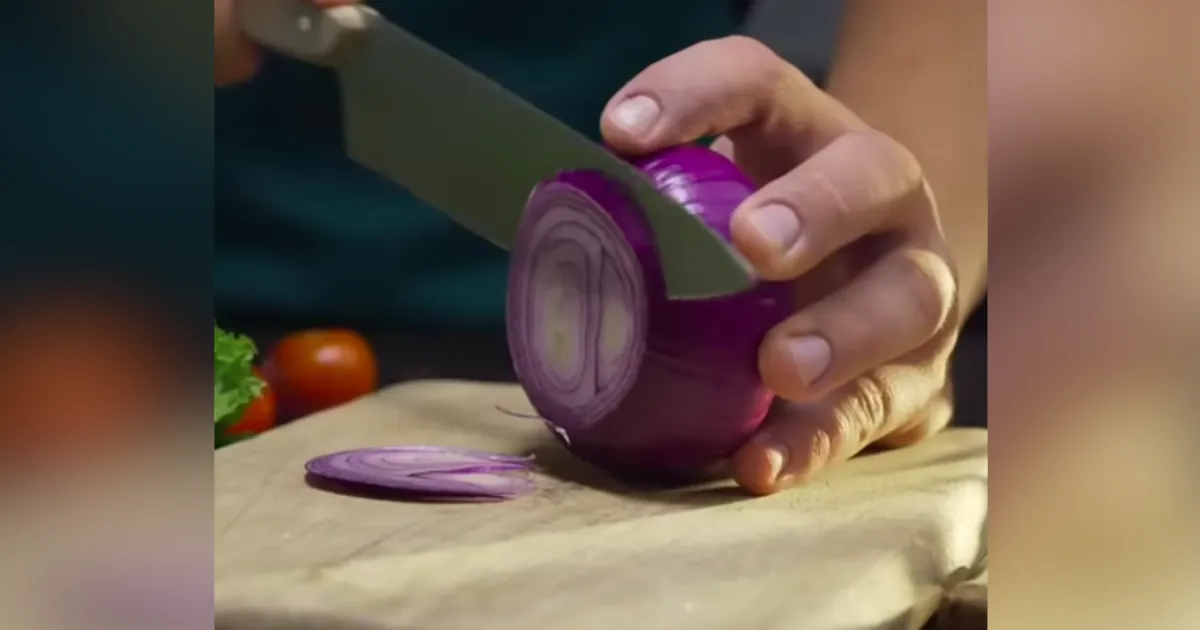
If you’re skeptical about home remedies for hair loss, Dr. Eric Berg says you should be. There are plenty of things out there that simply don’t work. Still, he’s excited about one kitchen staple he says is worth a try: plain onion juice.
His pitch is that it may help with different types of hair loss, whether the cause is autoimmune, nutritional, or an overgrowth of fungus or other microbes on the scalp. And no, he says, your hair won’t smell like an onion, as long as you wash it twice afterward.
So what’s the logic, and how do you make it? Dr. Berg walks through why onions are special, the basic recipe, and two upgrades: a few drops of rosemary oil and a fermented version he says takes it to the next level.
Table of Contents
Summarized from a video by Dr. Eric Berg, DC, on the Dr. Eric Berg DC YouTube channel. This article is a summary of the video “Onion Juice for Extreme Hair Growth: Stop Hair Loss.” All ideas belong to the video’s creator, and Dr. Berg did not write or review this article. Watch the original video below.
Key Takeaways
- Dr. Berg points to two things in onions: sulfur, a building block of keratin, and quercetin, a plant compound he links to hair growth.
- The basic recipe uses one organic red onion, applied to the scalp twice a week.
- He suggests adding 5 drops of rosemary oil, or fermenting the juice for 72 hours for a stronger version.
- He says to expect results after about 3 to 4 weeks, and to keep going for 4 to 6 weeks or longer.
Why Onions?
According to Dr. Berg, onions are loaded with sulfur. It’s not directly tied to hair loss, he says, but it supplies raw material for keratin, the main protein in hair, which is sulfur-based.
Onions also have a lot of quercetin, and red onions have the most. In his explanation, quercetin may help in several ways:
- Calming autoimmune attacks on the hair follicle, which matters for patchy loss like alopecia
- Supporting growth factors at the root of the hair
- Fighting microbes that cause yeast, fungus, mold, or dandruff on the scalp
The Basic Recipe
- Chop 1 organic red onion into small pieces.
- Blend it into a slurry.
- Strain it through cheesecloth into a jar or squeeze bottle.
- In the shower, wet your hair, then massage the juice into your scalp and roots for a couple of minutes.
- Leave it in for 30 minutes. Dr. Berg personally suggests 1 hour, and a shower cap works well.
- Rinse, then shampoo twice to get rid of the smell.
How often: twice a week, for about 4 to 6 weeks. He says you may start seeing growth around week 3 or 4.
Upgrade 1: Add Rosemary Oil
Dr. Berg suggests mixing in 5 drops of rosemary oil. He mentions a randomized trial from 2015 that compared rosemary oil to a leading alopecia medication and found it was about as effective. In his explanation, rosemary has anti-inflammatory and antioxidant plant compounds, boosts blood flow to the scalp, and may help with autoimmune issues.
What the Studies Say (According to Dr. Berg)
- Onion juice vs. water: he cites a study in the Journal of Dermatology that split people into two groups. After 6 weeks, he says the onion juice group had an 86.9% rate of significant regrowth, compared with 13% for the water group.
- Quercetin in mice: in an animal study, he says quercetin extracted from onion led to hair regrowth in all treated groups, with no regrowth in untreated ones.
Upgrade 2: Fermented Onion Juice
This is the version Dr. Berg says takes the recipe further. Fermenting, he explains, boosts the quercetin and the nutrients, since microbes make more vitamins. It also makes the juice more acidic, to about pH 5, which he finds therapeutic for the scalp.
How to make it:
- Peel, chop, and blend 1 onion, then strain out the pulp.
- Pour the liquid into a mason jar.
- Add 8 oz of water, 1 teaspoon of sea salt, and ½ teaspoon of raw honey. Mix well.
- Cover with cheesecloth or a coffee filter.
- Leave on the counter for 72 hours. By day two you should see tiny CO₂ bubbles.
- Strain through cheesecloth again and pour into a squeeze bottle.
How to use it: same routine as before. Massage into a wet scalp, wait about an hour, rinse thoroughly, shampoo twice. Do it twice a week for 6 weeks or longer, depending on your situation.
Two More Things He Mentions
- Vitamin D: Dr. Berg says vitamin D plays a role in hair growth and loss in many ways. He suggests at least 10,000 to 20,000 IU of D3 daily, or plenty of sun.
- Food: he says it also matters to eat foods that supply the nutrients your hair needs.
Practical Tips
- Do a patch test first. Dab a little onion juice on your inner arm and wait 24 hours to check for redness or itching.
- Keep it away from your eyes, and skip it on broken or irritated skin.
- If you add rosemary oil, stick to the 5 drops Dr. Berg mentions. Essential oils are concentrated.
- When fermenting, use clean jars and stop if it smells rotten or you see mold.
- Talk to your doctor before taking high-dose vitamin D. Dr. Berg’s suggested amount is well above the usual upper limit for adults, and a blood test can show whether you need extra.
- Sudden or patchy hair loss can have medical causes, so it’s worth seeing a doctor or dermatologist rather than relying on home remedies alone.
Related reading: Dr. Berg: The Ancient Oil He Calls Nature’s Botox.
Source & Credit
- Expert: Dr. Eric Berg, DC
- Channel: Dr. Eric Berg DC
- Video: “Onion Juice for Extreme Hair Growth: Stop Hair Loss” (6:18)
- Link: https://www.youtube.com/watch?v=y29tJpldBok
- Publish date: May 26, 2025
About This Summary
This article summarizes the views of Dr. Eric Berg, DC, as presented in his YouTube video. The opinions and claims expressed belong to the video’s creator and do not necessarily reflect those of LuvNutrition.online.
Medical disclaimer: This content is for general information only and is not a substitute for professional medical advice, diagnosis, or treatment. Always consult a qualified healthcare provider before using new products on your scalp, or changing your diet or supplements.