Fatty liver disease affects a huge number of people, yet most never hear their diagnosis. Dr. Mark Hyman says about 90 million Americans have it, roughly a third of the country, and that it’s a major risk factor for heart disease, diabetes, cancer, and dementia.
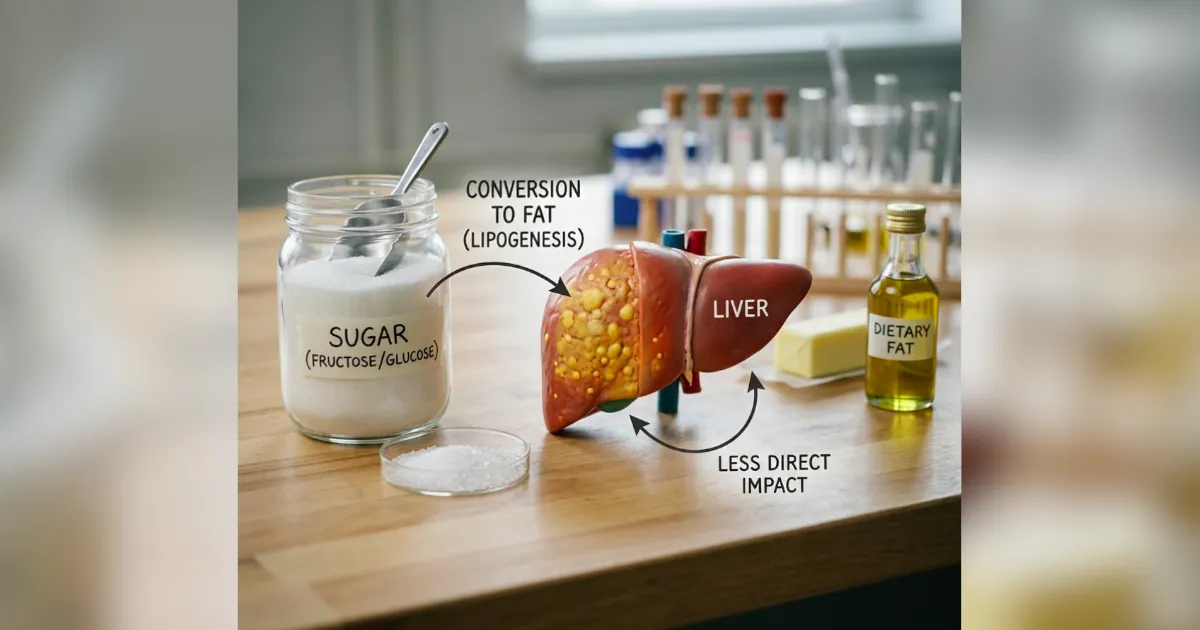
His central claim is simple: it’s not fat that makes a fatty liver, it’s sugar and starch. He points to the word itself. The French delicacy foie gras literally means “fatty liver,” and he uses it as an analogy for how excess starch and sugar push the liver to produce and store fat.
So how do you know if you have it, what does he say drives it, and what does he suggest doing? Here’s his explanation, along with the safety points you should keep in mind.
Table of Contents
Summarized from a video by Mark Hyman, MD, on the Mark Hyman, MD YouTube channel. This article is a summary of the video “Why Fat Is NOT the Enemy of Your Liver (Stop Doing This!).” All ideas belong to the video’s creator, and Dr. Hyman did not write or review this article. Watch the original video below.
Key Takeaways
- Dr. Hyman says sugar, starch, and especially high-fructose corn syrup are the main drivers of fatty liver.
- He says regular liver blood tests can look normal even when the liver is fatty, and suggests more sensitive checks.
- He argues that healthy fats can support the liver rather than harm it.
- He suggests certain foods and supplements, which should be discussed with a doctor first.
How He Explains the Cause
Dr. Hyman says that when you eat a lot of sugar and starch, the liver starts a process called lipogenesis, which means making fat. He calls this the body’s normal response to sugar, and says the real problem is too much of it for too long. He lists soda as the biggest source in the American diet.
He also says this liver fat is tied to insulin resistance, prediabetes, and the dangerous fat stored around the organs and belly, which in his view drives much of today’s heart disease, diabetes, cancer, and dementia.
Why Fructose Gets Special Attention
Dr. Hyman describes fructose as absorbed differently from other sugars. His distinction:
- Fruit: contains fructose, but packed in a matrix of fiber, vitamins, minerals, and antioxidants, so it’s absorbed more slowly. He says this is fine, and you should eat fruit.
- High-fructose corn syrup: he describes it as free fructose, not bound to glucose, and says it can be around 75% fructose in sodas and many processed foods.
His strongest piece of advice: avoid every food product with high-fructose corn syrup. He says it has no health benefits, shows up in unexpected places like salad dressing and tomato sauce, and is a sign of poor-quality food. He adds that whatever diet someone follows (vegan, paleo, low-carb, or high-carb), nobody would argue it’s good for you.
Starch Counts Too
Dr. Hyman says starchy, flour-based foods behave much like sugar once broken down. He notes that even whole-grain flour can be a problem, but whole intact foods such as whole beans or whole-kernel grains eaten with protein and fat are different, since they come with fiber and are absorbed more slowly.
His line: below the neck, your body can’t tell the difference between a bagel and a soda. He suggests treating these foods as an occasional treat rather than an everyday habit.
How to Find Out If You Have It
Dr. Hyman says standard liver blood tests are often normal even with fatty liver, unless it’s very advanced. He suggests looking at:
- AST and GGT: if they’re at the high end of normal or slightly high, he says that would concern him.
- A liver scan, such as a FibroScan, which he says can show the degree of fat and scarring.
- A liver MRI: he says liver fat should be under 2%, and he has seen people with 20% or more.
- Advanced cholesterol tests that measure particle size, since small particles, high triglycerides, and low HDL often go along with fatty liver.
He adds that some populations, such as people of Latin American background, may be genetically more susceptible.
What He Suggests Doing
Remove the problem foods. Cut high-fructose corn syrup, dramatically reduce sugar and starch, and avoid processed foods.
Add healing foods and habits:
- Healthy fats: he says fat can heal the liver. He lists avocados, olive oil, nuts and seeds, omega-3-rich fish, and MCT oil. He also says saturated fat from meat isn’t a big problem in this context.
- Exercise: to improve metabolism and insulin resistance and reduce inflammation.
- Liver-supporting vegetables: broccoli, collards, kale, arugula, and daikon radish, plus garlic and onions (rich in sulfur), cilantro, and parsley.
Supplements he mentions:
- N-acetylcysteine (NAC), which he says helps the body make glutathione, a key antioxidant
- Alpha-lipoic acid
- Milk thistle
- B vitamins, zinc, selenium, and magnesium
- Foods and herbs such as dandelion greens, artichoke hearts, rosemary, and curcumin
Practical Tips
- Ask your doctor about testing if you have belly fat, a high-sugar diet, prediabetes, or a family history. Don’t rely only on a standard liver blood test.
- Talk to your doctor or pharmacist before taking liver supplements. The liver processes everything you swallow, and some supplements and herbs can interact with medications or, in some people, stress the liver.
- MCT oil can cause stomach upset in some people. If you try it, start with a small amount.
- If you have diabetes or take medication for blood sugar or cholesterol, check with your doctor before making big diet changes.
- Alcohol can worsen liver disease. Ask your doctor how much, if any, is safe for you.
- See a doctor promptly if you notice yellowing of the skin or eyes, swelling in the belly or legs, or persistent pain in the upper right abdomen.
Related reading:
- Common Foods That Cause Inflammation.
- How to Speed Up Fatty Liver Recovery.
- Cancer Survivor Diet: Foods to Eat and Avoid.
Source & Credit
- Expert: Mark Hyman, MD
- Channel: Mark Hyman, MD
- Video: “Why Fat Is NOT the Enemy of Your Liver (Stop Doing This!)” (about 11:45)
- Link: https://www.youtube.com/watch?v=1G3lzYcHyGA
- Publish date: Oct 7, 2022
About This Summary
This article summarizes the views of Mark Hyman, MD, as presented in his YouTube video. The opinions and claims expressed belong to the video’s creator and do not necessarily reflect those of LuvNutrition.online.
Medical disclaimer: This content is for general information only and is not a substitute for professional medical advice, diagnosis, or treatment. Always consult a qualified healthcare provider before changing your diet or taking supplements.