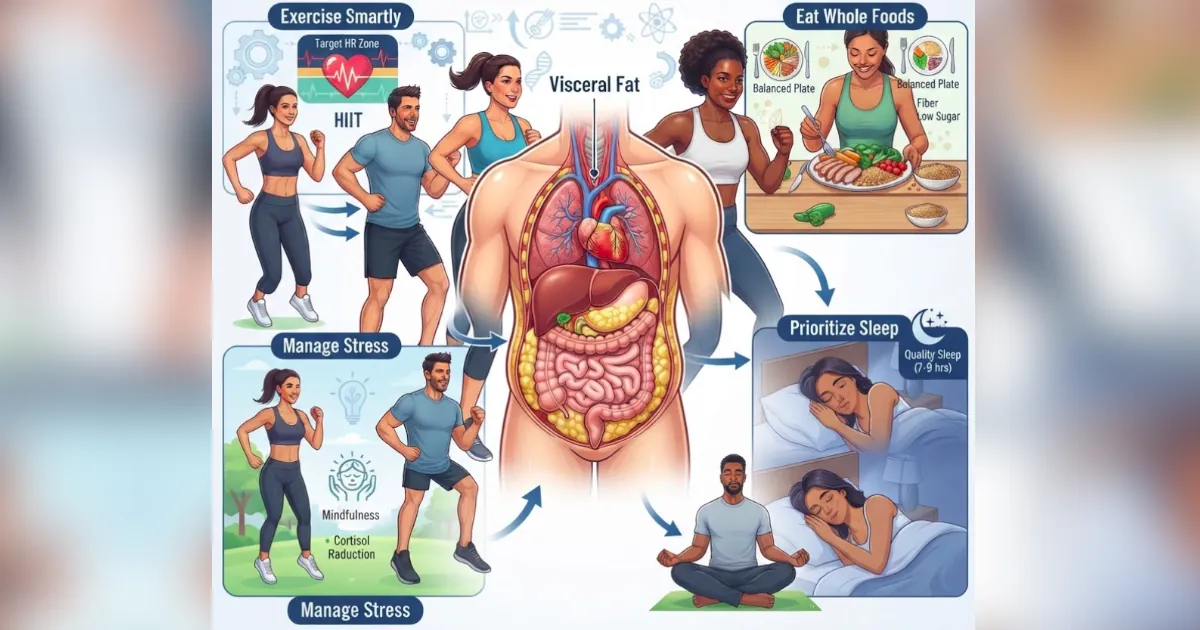
You can lose a lot of weight and still be stuck with belly fat. Dr. Leonid Kim says that’s because belly fat isn’t only the layer under your skin. There’s also visceral fat, packed around your internal organs, including your stomach, liver, and pancreas.
That matters, he explains, because visceral fat is linked to diabetes, fatty liver, heart disease, and even cancer. The good news, in his view: it’s also the easiest fat to lose once you know how to target it.
So what does he suggest? Here’s his rundown of the foods, the drink, and the type of exercise he says give you the most for your effort, plus the finding about the scale that might change how you track your progress.
Table of Contents
Summarized from a video by Leonid Kim, MD, on the Leonid Kim MD YouTube channel. This article is a summary of the video “Fastest Way to Shrink Visceral Fat (Backed by Science).” All ideas belong to the video’s creator, and Dr. Kim did not write or review this article. Watch the original video below.
Key Takeaways
- Dr. Kim says colorful vegetables (rich in carotenoids) and green tea (rich in catechins) may help reduce visceral fat.
- He says exercise tends to work better than diet for visceral fat specifically.
- He points to vigorous aerobic exercise and HIIT as the most effective types, but says the best one is the one you’ll stick with.
- He adds that visceral fat can shrink even when the number on the scale doesn’t move.
Food #1: Carotenoid-Rich Vegetables
Carotenoids are the natural pigments that make carrots orange, tomatoes red, and spinach dark green. Dr. Kim explains they act as powerful antioxidants, calming the inflammation that comes with energy excess. In his explanation, they may also help turn on genes that burn more fat and quiet genes that tell the body to store it.
He cites a randomized, double-blind trial from Japan: just 8 weeks of eating carotenoid-rich vegetables reduced visceral fat in all four groups tested, with the best results in the group eating carrots and a type of cabbage.
How to get them: carrots, sweet potatoes, bell peppers, spinach, and squash. Any colorful vegetable or fruit likely contains some type of carotenoid.
Food #2: Catechins (Think Green Tea)
Catechins are plant compounds with antioxidant and anti-inflammatory effects. Dr. Kim’s favorite source is green tea. He says they:
- Boost fat burning and energy use by stimulating the nervous system
- Block fat-processing enzymes like lipase, so less of the fat you eat is absorbed
- Work together with caffeine, which he says enhances fat burning
He cites a double-blind, placebo-controlled trial in Japan where 12 weeks of drinking catechin-enriched green tea (about 600 mg of catechins a day) significantly reduced visceral fat. He suggests minimally processed teas such as matcha or sencha.
Exercise: The “Multiplier”
Dr. Kim says anything that creates a calorie deficit helps, but the right foods get you there faster, and the right exercise multiplies the effect.
He cites a meta-analysis of 117 studies finding that diet has a bigger effect on overall weight loss, while exercise has a better effect on visceral fat.
He also describes an older study where people did just two 45-minute cycling sessions a week at moderate intensity for 2 months. The results he reports:
- 48% less visceral fat
- 41% better insulin sensitivity
- 18% loss of fat under the skin
- Body weight stayed about the same
His point: don’t get discouraged if the scale isn’t moving. In his view, the scale is a poor indicator of progress, since it doesn’t show changes in body composition.
Which Exercise Is Best?
A systematic review of 84 randomized trials, Dr. Kim says, found that vigorous aerobic exercise and HIIT (high-intensity interval training) were the most effective for visceral fat. Resistance training helped too, but less, though he stresses it’s still essential for muscle and overall metabolism.
Between HIIT and regular aerobic exercise, he says there’s no meaningful difference, and the small signals in the data (like running slightly beating cycling) are “splitting hairs.” His real advice: the best exercise is the one you’ll actually stick with. A perfect plan you do twice a month loses to a walk you enjoy several times a week.
The routine the studies point to, according to him:
- 2 to 3 times a week, at least 45 minutes each
- At least moderate to vigorous intensity (about 70% to 80% of your maximum heart rate)
No heart rate monitor? Use the talk test:
- Moderate: you can speak in full sentences but sound a little out of breath
- Vigorous: you can only say a few words before needing a breath
More Exercise, More Benefit
Dr. Kim says the effect of exercise is dose-dependent: more activity or higher intensity led to proportionally bigger drops in visceral fat, according to a study in the British Journal of Sports Medicine. That wasn’t true for dieting. He explains there’s a limit to how much calorie cutting helps, and no extra benefit past a certain point.
His takeaway: you don’t need to starve yourself. Stay in a small calorie deficit, and gradually step up your activity if you want to lose visceral fat faster.
Practical Tips
- Check with your doctor before starting vigorous exercise if you have a heart condition, high blood pressure, diabetes, joint problems, or haven’t been active in a long time. Build up gradually.
- Start with a brisk walk and add intensity over weeks, using the talk test.
- Green tea contains caffeine. If you’re sensitive to it, pregnant, or take medication, ask your doctor how much is right for you.
- Brewed green tea is different from concentrated green tea extract supplements. The research he cites used tea. Ask a healthcare provider before using extracts.
- Track more than the scale, such as waist measurement, how your clothes fit, energy, and strength.
- Don’t cut calories sharply. A small, steady deficit is what Dr. Kim describes.
Related reading: Dr. Leonid Kim: The Steps He Says Can Help Fatty Liver Faster.
Source & Credit
- Expert: Leonid Kim, MD
- Channel: Leonid Kim MD
- Video: “Fastest Way to Shrink Visceral Fat (Backed by Science)” (9:37)
- Link: https://www.youtube.com/watch?v=Zt6WaTBnj7E
- Publish date: Oct 20, 2025
About This Summary
This article summarizes the views of Leonid Kim, MD, as presented in his YouTube video. The opinions and claims expressed belong to the video’s creator and do not necessarily reflect those of LuvNutrition.online.
Medical disclaimer: This content is for general information only and is not a substitute for professional medical advice, diagnosis, or treatment. Always consult a qualified healthcare provider before changing your diet, starting a new exercise routine, or taking supplements.