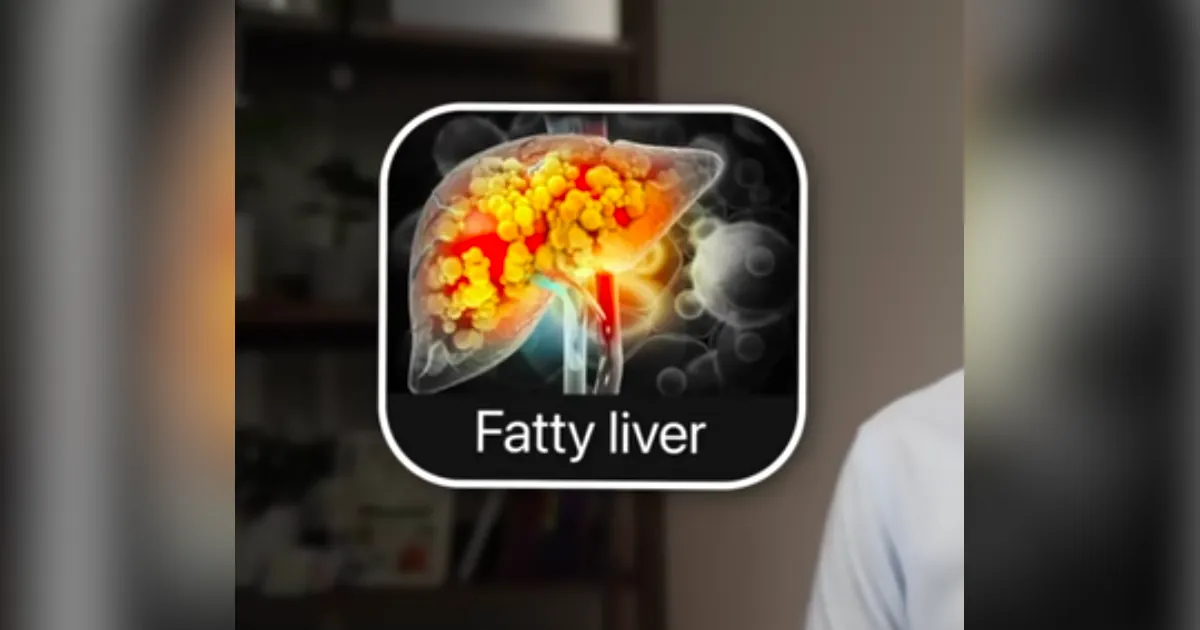
If you’ve been told you have fatty liver, there’s a good chance your doctor said one thing: lose weight. Dr. Leonid Kim says that’s not wrong, but it’s not very helpful either. He compares it to asking how to run a marathon and hearing “just run 26.2 miles.”
So in his video, he lays out the specific steps he says can help you lower liver fat quickly, in days to weeks, not months. The first culprit he names might surprise you, and it isn’t fat.
Here’s his full walkthrough, from fructose and sugary drinks to calories, protein, fats, carbs, and a few optional supplements.
Table of Contents
Summarized from a video by Leonid Kim, MD, on the Leonid Kim MD YouTube channel. This article is a summary of the video “The FASTEST Way to Reverse Fatty Liver, Naturally.” All ideas belong to the video’s creator, and Dr. Kim did not write or review this article. Watch the original video below.
Key Takeaways
- Dr. Kim names fructose, especially from processed foods and sugary drinks, as a main culprit.
- He says fruit is different from juice, because fruit comes with fiber.
- He says any diet that creates a calorie deficit can reduce liver fat, but limiting fructose and processed carbs gets you there faster.
- His practical tips: more protein early in the day, healthier fats, and low-glycemic carbs.
- He says alcohol is best avoided with fatty liver.
Step 1: Cut Back on Fructose
Fructose is a simple sugar, and even table sugar breaks down into fructose and glucose once you eat it. According to Dr. Kim, the liver can’t handle too much of it. It turns the excess into fat that builds up in liver cells, and the process produces uric acid, which leads to inflammation and ongoing liver damage.
He adds that fructose doesn’t trigger leptin, the hormone that signals fullness, so it’s easy to overeat. He cites studies showing that just 7 days of a high-fructose diet increased liver fat and worsened the liver’s insulin sensitivity.
Fruit Isn’t the Problem
Before you give up fruit, Dr. Kim says the problem is the manufactured fructose in processed foods, not whole foods. Fruit comes with fiber, which slows absorption, and many fruits contain vitamin C, which he says helps block some of fructose’s effects and inflammation. He notes that studies link higher fructose intake from fruit with a lower risk of fatty liver.
Watch Your Drinks
He calls sugary drinks one of the biggest drivers of fructose overload:
- Soda: obvious, but not the only one.
- Juice: often promoted as healthy, but it’s concentrated sugar without the fiber. “Natural sugars” or “no added sugar” on the label doesn’t change that.
- Boba tea: can pack as much sugar and calories as a heavy dessert. He suggests asking for 50% or 75% less sugar.
- Energy drinks and sports drinks.
How much is too much? The American Heart Association recommends under 36 g of added sugar a day for men and under 25 g for women. For fatty liver, Dr. Kim suggests avoiding all sugary drinks. He compares a can of Coke (about 39 g) to a 12 oz apple juice (about 33 g) and orange juice (about 31 g), pointing out that “healthier” drinks can be about as bad when it comes to sugar.
The Good News: It Can Change Quickly
Dr. Kim cites several findings:
- About 9 days of fructose restriction can lower liver fat.
- A randomized trial in JAMA found that 8 weeks of cutting sugars to under 3% of daily calories in adolescent boys significantly improved liver fat.
- Low-carb approaches with fewer calories showed liver fat reductions in as little as 48 hours.
- A carbohydrate- and protein-rich diet with the same calories reduced liver fat by 43% in 2 weeks.
He stresses that any diet creating a calorie deficit will reduce liver fat, but limiting fructose and processed carbs at first can speed things up.
Does the Type of Diet Matter?
Dr. Kim says there’s controversy about restricting fat, but a meta-analysis of 60 studies with over 100,000 people found that higher calorie intake, not diet composition, was linked with fatty liver.
He also describes a small Swedish trial comparing a low-carb, high-fat diet, a 5:2 Mediterranean-style diet, and standard care. After 12 weeks, all groups lowered liver fat, but the first two had reductions of just over 50%, compared with 17% for standard care. He points out the limits: it was small, not double-blinded, and the standard care group had fewer dietitian visits.
His conclusion: for the most part, all roads lead to Rome, so choose the approach you can sustain long term.
Protein: Start the Day With More
To help create a calorie deficit, Dr. Kim recommends more protein, especially at breakfast. He cites a study of more than 9,000 Australians where protein earlier in the day was linked with eating less later, while less morning protein meant more processed and sugary food at night. His suggestion: at least 30 to 35 g of protein per meal.
Fats: Choose Wisely
- Increase polyunsaturated and monounsaturated fats from fish, nuts, and avocados.
- Be careful with saturated fat. He says several studies link high intake with fatty liver risk, and describes a trial where overfeeding saturated fat (palm oil) raised liver fat within 7 weeks, while polyunsaturated fat (sunflower oil) didn’t.
- Saturated fat is fine in moderation, he says. Eat less from processed meats, fried foods, and pastries, and more unprocessed meat. He says red meat is fine.
Carbs: Quality Over Quantity
Cutting all carbs isn’t required, Dr. Kim says. The type matters more. He suggests low glycemic index carbs such as legumes, whole grains, and dairy, and staying away from white bread, most breakfast cereals, and processed potatoes like chips.
Coffee and Alcohol
- Coffee may have protective effects against liver fibrosis (more serious fatty liver), but he notes this comes from observational data, which can’t prove cause and effect.
- Alcohol should be avoided. He says it directly worsens liver fat, and a recent systematic review found that even moderate drinking may double the risk of disease progression in people with non-alcoholic liver disease.
Optional Supplements
Dr. Kim says you don’t need supplements to fix fatty liver if you eat the right foods, but some show promise and are worth discussing with your doctor:
- Omega-3 (EPA/DHA): a meta-analysis of 11 trials showed improved liver markers and a small drop in liver fat. He warns that higher doses are linked to a greater risk of atrial fibrillation.
- Berberine: a meta-analysis of 10 trials found reduced liver fat, better liver enzymes, and improved lipid and glucose metabolism.
- Others he mentions: curcumin, CoQ10, certain probiotics, and milk thistle.
Practical Tips
- Don’t change prescribed medication without talking to your doctor. If you have fatty liver, ask about blood tests or imaging to track your progress.
- If you have diabetes or take medication for blood sugar, check with your doctor before cutting carbs or sugar sharply, since doses may need adjusting.
- Berberine can interact with several medications and isn’t recommended during pregnancy. Omega-3 at high doses can affect bleeding and heart rhythm. Ask your doctor or pharmacist before starting either.
- If you drink alcohol regularly, talk to a healthcare provider about the safest plan for you.
- Make small swaps first: water instead of juice, less sugar in boba, protein at breakfast.
- Tell a doctor if you notice yellowing of the skin or eyes, swelling in your belly or legs, or persistent pain in the upper right abdomen.
Related reading: Dr. Berg: Why He Says a Flatter Stomach Starts With Insulin.
Source & Credit
- Expert: Leonid Kim, MD
- Channel: Leonid Kim MD
- Video: “The FASTEST Way to Reverse Fatty Liver, Naturally” (14:37)
- Link: https://www.youtube.com/watch?v=EthLKTthXr0
- Publish date: Nov 18, 2026
About This Summary
This article summarizes the views of Leonid Kim, MD, as presented in his YouTube video. The opinions and claims expressed belong to the video’s creator and do not necessarily reflect those of LuvNutrition.online.
Medical disclaimer: This content is for general information only and is not a substitute for professional medical advice, diagnosis, or treatment. Never stop or change prescribed medication without talking to your healthcare provider. Always consult a qualified healthcare provider before changing your diet or taking supplements.